The ARPG genre has two leading titans in recent years: Path of Exile and Diablo 4. While both deliver loot‑driven action, dungeon crawling, and endgame content, they diverge significantly in how they approach depth, design philosophy, build complexity, and community systems. In this comparison, we’ll examine how each game approaches core mechanics, customisation, economy, accessibility, and player experience, helping you understand which might better suit your preferred style.
Design Philosophy: Depth vs Accessibility
Path of Exile’s design emphasises systems, complexity, and player mastery. From its sprawling passive skill tree to its intricate crafting and trading systems, the game rewards investment of time and attention. Players who love deep build optimisation, theory‑crafting, and economic systems will find PoE rich and rewarding.
By contrast, Diablo 4 places a premium on accessibility, cinematic presentation, and streamlined progression. It invests heavily in story, open‑world exploration, and polished user experience. While there is build customisation, the barriers to entry are lower and the game is generally more approachable for casual or new ARPG players.
Character Customization and Build Complexity
In PoE, character development is deeply malleable. The passive skill tree spans over a thousand nodes, and players combine gear, skill gems, support gems, crafting, and trade to shape their build. This system appeals to players who enjoy tweaking every detail and experimenting with unusual build combinations. Diablo 4 offers customisation through skill trees, gear, and Paragon boards, but the depth is more constrained. The build space is designed to be powerful but more guided, ensuring players spend less time figuring out mechanics and more time playing. The trade‑off is less extreme variety, but greater ease of entry and faster progression.
Loot, Crafting and Economy Systems
Path of Exile’s loot and economy systems are layered and interwoven: currency items that double as crafting tools, a vibrant player‑driven market, and high degrees of freedom in how you obtain or trade gear. This creates a meta‑game of trading, crafting, and optimisation
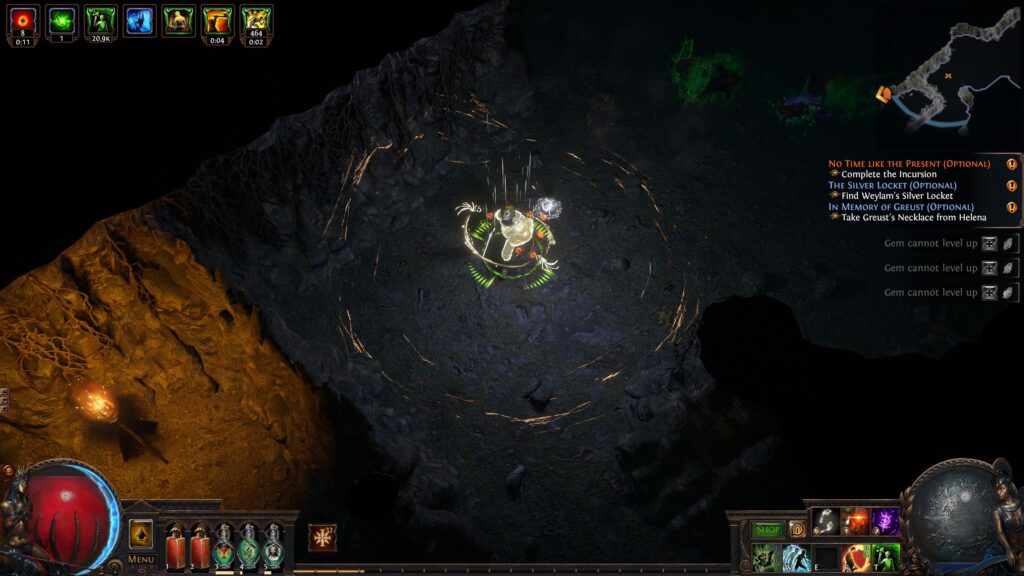
Diablo 4 has a more conventional loot system: gear drops, affixes, upgrade paths, and crafting, but the trading and economy elements are less prominent. The focus is on the loot‑hunt experience and personal progression rather than an open trade economy. For players who want ease over economics, this is a plus; for those who enjoy the economic meta, it’s a difference worth noting.
Endgame and Replayability
PoE’s endgame is expansive and designed for long‑term engagement: complex map systems, league mechanics, crafting, trading, and evolving meta. The depth of build optimisation and community economy ensures high replayability, especially for dedicated players.

Diablo 4’s endgame is robust and polished, with seasonal content, world tiers, shared world features, and accessible challenges tailored for both solo and co‑op. While it may lack some of the niche build complexity of PoE, it delivers a reliably satisfying experience more quickly.
Community and Social Systems
Because PoE’s economy is open and trade‑driven, the community plays a central role in progression: building, crafting, trading, and sharing knowledge form a major part of the experience. The free‑to‑play model supports this by allowing most players to participate fully. On the other hand, the depth and complexity mean that newcomers may need to invest more time to feel comfortable. Diablo 4 uses a shared‑world structure, accessible open‑world zones, and smoother matchmaking and co‑op frameworks. This makes it easier for casual or social players to join and jump into co‑op content quickly. The trade‑off is that the depth of trading and crafting is less emphasised, and more of the experience is “go‑play” rather than “study and optimise.”
Which Should You Choose?
If you enjoy deep systems, tinkering with builds, engaging in economic meta‑play, and investing time to master complexity, Path of Exile is likely the better fit. Its free‑to‑play model makes it accessible, and the potential return on your time investment is very high.

If instead you prefer a more streamlined, polished experience that gets you into the action quickly, with less time spent on optimisation and more time on exploration and play, Diablo 4 may be the ideal pick. Ultimately, both games have strengths. Your choice comes down to how much depth you want, how comfortable you are with complexity, and whether you value freedom/optimisation (PoE) or accessibility/speed (Diablo 4).
Conclusion
Path of Exile and Diablo 4 represent two successful but distinct visions for the ARPG genre. PoE emphasises freedom, depth, economy, and long‑term investment; Diablo 4 emphasises accessibility, polish, and streamlined progression.
The free‑to‑play model of PoE further amplifies its community and economy, making it a unique ecosystem of its own. Both games are great—in your hands, the best one is the one that matches how you *like* to play.








Leave a Reply