Boss arena design has undergone a fundamental evolution between :contentReference[oaicite:0]{index=0} and :contentReference[oaicite:1]{index=1}, reflecting a broader change in how encounters are meant to be experienced. In the original game, arenas often functioned as neutral containers, places where the boss existed but the environment itself rarely demanded attention. In the sequel, arenas are designed as active participants in the fight. Space, terrain, visibility, and movement constraints now shape decision-making as much as the boss’s abilities. This evolution transforms boss fights from damage races into spatial challenges that reward awareness and planning.

Earlier Arenas as Passive Backdrops
In earlier Path of Exile encounters, boss arenas were frequently large, open, and forgiving. While some fights introduced hazards, the environment itself was rarely the primary threat. Players learned to focus on maximizing damage output, often ignoring spatial considerations entirely. Survival depended more on numerical defenses and burst potential than on positioning. This design allowed powerful builds to trivialize encounters, reinforcing a playstyle centered on overwhelming force rather than interaction with space. Arenas existed to host combat, not to shape it.
Path of Exile Two Arenas as Combat Systems
Path of Exile Two reframes arenas as structured systems that communicate danger through layout and constraint. Narrow pathways, elevation changes, and line-of-sight blockers influence movement and positioning. Players must consider where to stand, when to move, and how to control space over time. These arenas guide behavior without explicit instruction, using environmental pressure to teach pacing and restraint. The result is encounters that feel more intentional, where awareness of surroundings is inseparable from combat execution.
Environmental Clarity and Readability
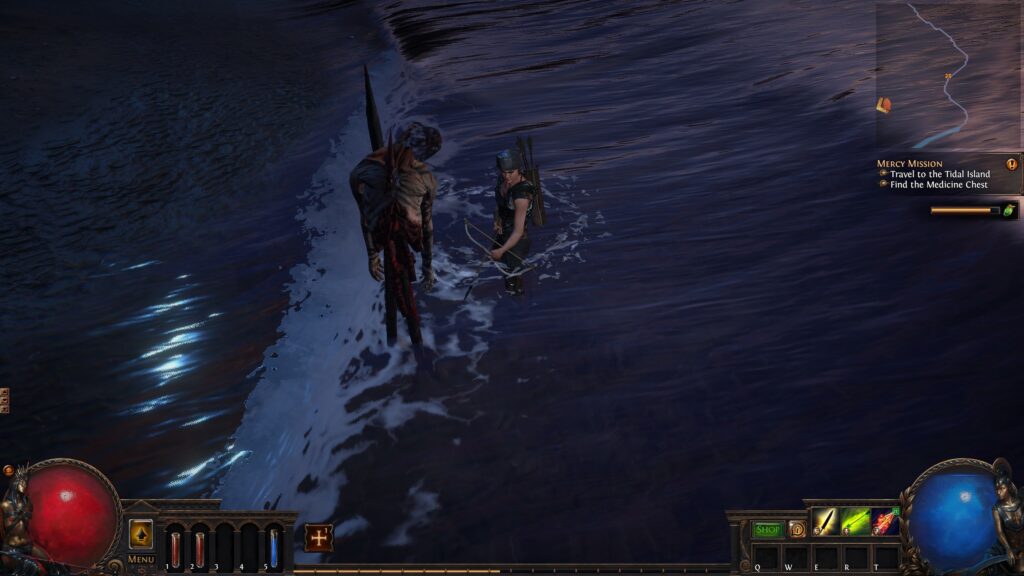
Improved visual clarity plays a critical role in this evolution. Arenas in Path of Exile Two are designed to communicate threats clearly, using contrast, lighting, and geometry to draw attention to danger zones and safe areas. This clarity supports the game’s shift toward intentional play, allowing players to make informed decisions rather than reacting blindly. Environmental readability reduces frustration while increasing responsibility, as mistakes feel earned rather than arbitrary.
Key Differences in Arena Design Philosophy
The contrast between the two games becomes clear when comparing their core arena design priorities.
| Design Aspect | Path of Exile | Path of Exile Two |
|---|---|---|
| Role of environment | Passive backdrop | Active combat element |
| Spatial pressure | Minimal | Constant and meaningful |
| Player focus | Damage optimization | Positioning and control |
These differences highlight a philosophical shift toward encounters that test understanding rather than raw power.
Impact on Player Skill Development

This evolution in arena design changes how players develop skill over time. Mastery now involves learning spatial patterns, anticipating environmental pressure, and managing movement deliberately. Players who adapt gain confidence that transfers across encounters, while those relying solely on damage struggle. Arena design thus becomes a teaching tool, shaping behavior through experience rather than instruction.
Conclusion
The evolution of boss arena design between Path of Exile and Path of Exile Two reflects a deeper shift toward intentional, spatially aware combat. By transforming arenas into active systems, the sequel elevates encounters into tests of understanding and control. Boss fights become less about overpowering foes and more about mastering the space in which they exist.








Leave a Reply